Our Spring and Summer Plans

Share this post

We’re back.  Just had one of those weekends where we did next to nothing.  No home improvement projects to blog about.  No chores.  Nothing.  Watched a ton of Doctor Who.  It was everything I hoped it would be.  My batteries are officially recharged.

I’m trying to keep up the frequency of our posts, but I’ve been taking some extra time during the week to work on our new blog theme.  I haven’t touched it since Christmas and just decided to start from scratch again.  So far so good.  I think you’ll like it.  Keeping it simple.  In any case, trying to keep three posts a week and make time for a theme build just isn’t happening.  Working in web design or graphic design in general is not an area of strength for me so it’s mostly slow going.

In other news, it’s been a while since we’ve had some direction around here.  We just got done a major carpentry project and dabbled in some concrete work.  I think it’s time for a new to-do list so you know what we’re planning.

With the end of my spring grad class and the weather getting warmer, it’s officially outdoor season here.  While there are still a good amount of indoor projects on our to-do list, the vast majority of our work plans are aimed at exterior projects.

Here is a list of the projects we’re planning on tackling this spring (what’s left of it) and summer.  Most of these ideas are going to be relatively low cost.  We were hoping to get started on a deck build, but have decided to punt that at least into the fall.

garage unorganized1.  Clean and organize the garage.  Our garage is the bane of Lisa’s existence.  It’s dirty, unkempt and filled with bugs year round.  This is now priority numero uno.  In order to bring the garage up to something more tolerable, we have a series of tasks slated for this space.

  • Apply another coat of epoxy on the floor
  • Add shelves and additional storage
  • Do something about our God-forsaken window treatments
  • Add stroller storage
  • Paint the interior door black
  • Dress up the stairs

side flower bed2.  Flower bed fix ups.  Time to bring these once proud flower beds up to snuff.  Our front beds are in decent shape, but our side beds are overgrown and are in need of re-edging and some additional work.

mailbox flowers(via Greengardenista)

3.  Flower bed by mailbox.  Remember this pin?  We’ve been pining after this look for months.  It’s time to make it happen.  Hoping we can make a big improvement to a small space.

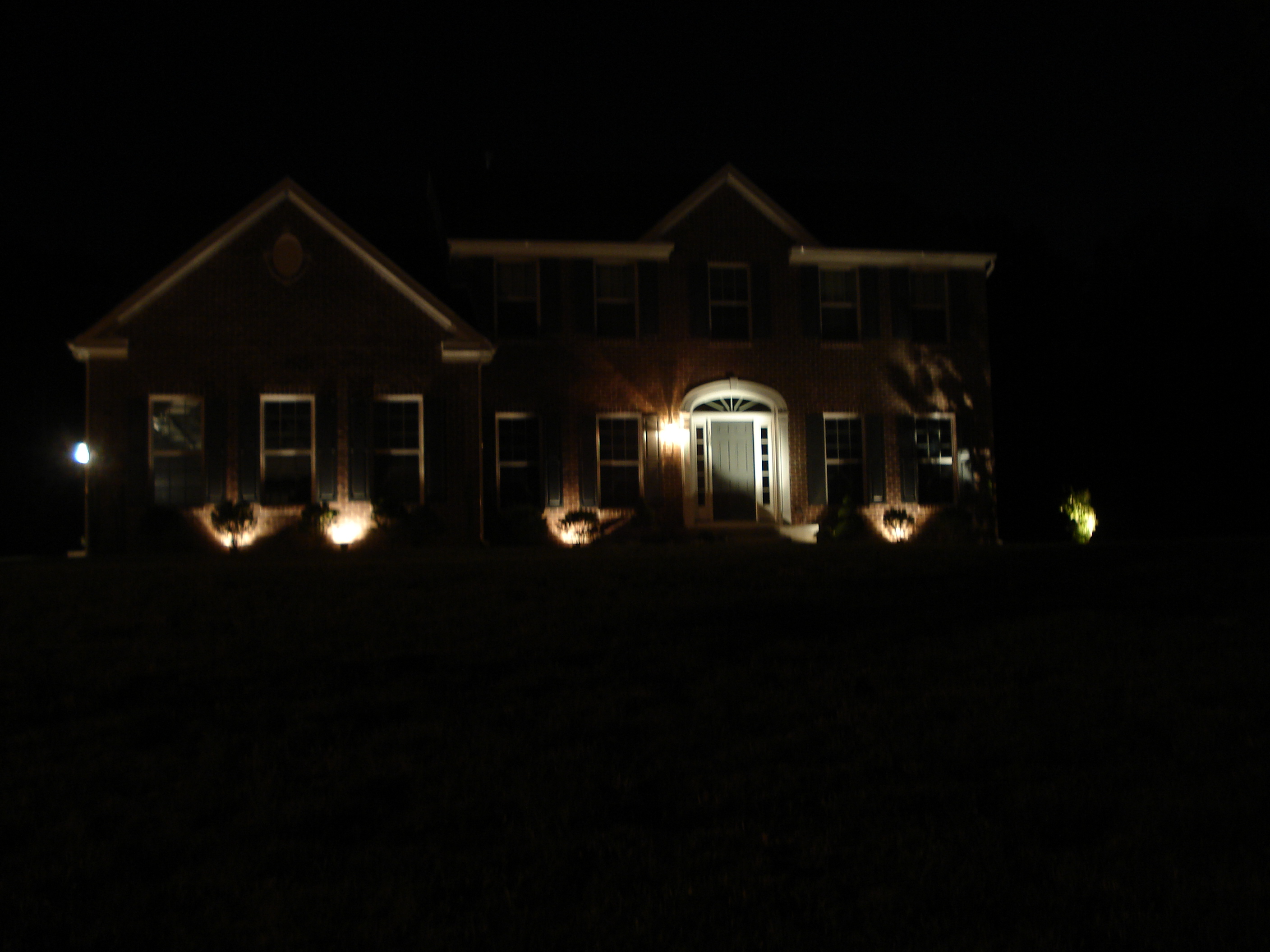
landscape lights4.  Add more exterior lights.  One of our first posts when we started blogging was the landscape lighting we added.  I’d like to make the exterior of the house pop a bit more and take care of some dimly lit areas.  A couple more spot lights should do the trick.  Oh and I need to take some quality SLR shots of the house lit up at night.

drip irrigation5.  Drip irrigation.  Also one of our earlier series of posts.  I bought enough supplies to take care of the entire perimeter of the house, but still need to add the system to one of our side flower beds.  You’ll get a refresher on drip irrigation installation.  Piece of cake.

6.  Add motion sensors to our exterior spot lights.  Quick. Easy.  Need to do it.

flower bed7.  Shed flower bed.  After we built our shed, I gave it a rectangular flower bed that wrapped around its three sides.  Looks okay, but is impossible to cut easily with a riding mower.  I’m going to reshape the beds to make this sort of maintenance easier by incorporating curves.

These last two are inside-the-house projects, but so what.

family room8.  Family room trim.  Our family room is big and plain (old photo).  We’ve been kicking around some ideas on how to add some character and interest without breaking the bank.  Keep an eye on our Pinterest activity in the near future for hints of what we’ll be doing.  I’d ideally love to be done with this project before I start my last grad course at the end of August.

9.  TV Console.  Thought I’d be knee deep in plywood by now, but think this one may wait for a rainy day.  See this post for more info on this project.

Ambitious list?  Sure is.  I work better with longer lists.  Gives me something to shoot for.

What’s on your spring/summer to-do list?

LED Outdoor Lights

Share this post

For the past couple years since we’ve lived in our current house we’ve had some issues with our exterior garage lights.  The fixtures themselves aren’t really the problem, it’s the bulbs.  I’m not sure if it’s the changing temperatures between the seasons or what, but they never seem to last longer than a few weeks before one or both are burned out.

Ehh.  Looks like they need to be cleaned a bit too!

Anyway, one of the culprits of their short life may due to the fact that they’re on pretty much 24/7.  A few months ago, we added a very basic light sensor to each bulb.  Essentially, if it’s daylight out, the lights are supposed to be off.  That worked for a couple weeks, then some nasty bugs crawled into the light sensor and blocked the light, so they run all day.

Here’s that sensor on the bulb…

and separated… that little stem is where the sensor/bugs are.

While in Lowe’s recently, buying more poplar for our raised panel project, I stopped in the light bulb section.  Stops in this isle for outside bulbs have been way too frequent.  This trip was the first time I paid any attention to the LEDs.  I’ve been aware of LED for industrial applications and some more unique residential uses like undercabinet lighting, but I’ve never noticed them for plan old bulb replacement.  I can tell you the prices varied wildly.  A large flood light style LED was listed for nearly $56!!  I didn’t think they’d made or carried the LED equivalent of what I was looking for, which is a clear exterior grade bulb.

Then I bumped into this guy…

It was around $13 and if you can read the label, it’s supposed to last 50 times longer than the average 25 Watt filament bulb!  It’s around 130 lumens, where an actual 25 Watt bulb is around 190.  So, the filaments are slightly brighter.  At about $1.50 a bulb, if I get even 10 times the life of the average bulb, then this LED has paid for itself.  The big question though is how does it look.  How’s the quality and the ambiance?

Not bad.  I’m not one to worry too much about the ambiance or the color of the light for outside bulbs, so to be honest, I want it to be bright and last a while.  It’s certainly bright.  It looks brighter than the 190 lumen 25 Watt bulbs I’ve been using.  I think I’ll keep them.

Any green bulbs in your house or apartment?  What do you think of them?  Are you stocking up on filament bulbs?

Landscape Lighting Finished… Well, Almost

Share this post

So last time we worked on our landscape lighting project, we were able to get the transformer installed and the four flood lights connected.  After a brief test with an extension cord, we still have some adjustments to make.  It’s always a good idea when doing a project like this to stop and see how the progress is coming along.  There were a couple problems we noticed the first time we turned the lights on:

1.  The four flood lights didn’t look bright enough and didn’t illuminate enough of the house.  There are a few ways to correct this and we’ll discuss that below.

2.  We could use a few more lights.  Too much of the house is under lit.  We’ll add a couple spot lights to correct this deficiency.

First we’ll show you our spot light install.  We purchased two inexpensive 20 Watt halogen spot lights from the local building supply store.  We positioned one on the corner of the house to uplight the Walking Stick and the other to light the front door.  We could probably use a few more, but we can always add them at a later time.  Adding lights to an existing system is as easy as splicing into an existing wire or simply running a new one to the transformer.    For our new spot lights, we ran one new wire for both lights.

Here’s the one…

Positioning the front door spot light

Here’s the other…

The spot light for the Walking Stick.

To provide some further clarification into how to remove the insulation and splice the wires, below are some photos and some quick instructions.  As always, make sure the power is off and unplugged to the transformer when you add any circuits or make any changes to the lighting.

1. After the lights are anchored into the ground in the locations we selected, I ran a wire from the front door spot light to the walking stick spot light. I then ran another wire from the walking stick spot light to the transformer.

2. Now we can prep the wires and splice at the first spot light location.

The wire is split with a pair of wire cutters and pulled apart.


Using a pair of Super Sevens to strip the wire leads.


The exposed leads. Notice the bottom wire has some stamped writing on it. That wire will be my "black" wire and the other my "white."


The wires from the front door spot light spliced into the wire running to the other spot light. These wire leads now get covered by an exterior quality wire nut

3.  Now this process can be repeated at the other spot light.  However, at that location, I have three wires to splice, because I also have my wire that runs to the transformer.

4.  Since the last time I worked on this project, I bought some Romex connectors to help secure the cables penetrating into the transformer.  We’ll remove and reinstall those wires to get the Romex connector in place.

This is what a Romex connector looks like. It goes by several names.

The wires come out and get run through the Romex connector. The Romex connector has a lock nut which goes on the inside of the transformer. The other side has a couple screws, which when tightened, hold the wires in place.

5. When I was reconnecting my wires into the transformer, I had the opportunity to make some changes. First, I have to land all my “white” wires on to the Com1 slot. I installed my new spot lights on to the lowest voltage setting, 12 volts, because both lights are fairly close to the transformer.  Then I installed my next closest lights in the 13 volt slot and the remaining circuit on the 14 volt slot. By increasing the voltage on those existing flood light circuits, I can be sure that if they aren’t lighting the house up enough, it’s not due to a lack of voltage.

6. At this point I’m ready to close up the transformer. The wires are carefully tucked inside and the water-tight door is shut. These boxes feature a side lock to keep it secure. I’ll be going back in this box soon enough to install an electronic timer, but that will have to wait until I install my exterior outlet.

The transformer with the door closed.


The wires are cleaned up a bit by using zip ties.

Now we can move onto correcting the problem with the flood lights.  We noticed during our first trial run that they didn’t seem to be lighting up enough of the house.  The first thing I tried besides playing with the angle of the light housing was the light filter.  The lights come from the factory with a cloudy glass filter installed.  This is supposed to soften the light out a little bit, but it can diminish the effective volume of the light as well.  So, we swapped ours out for a clear glass insert.  Luckily, it only takes a minute.


Flood light with the cloudy filter.

Clear filter installed.

Now that we got that squared away, the best solution to our under lighting problem seems to be moving the lights closer to the house.  This can also be done quickly and easily by just pulling on the light housing out of the ground or using a crow bar to pry on the stake.  The light can then be swiveled off the stake and the stake can be reset into a new location.

Before moving the flood lights closer.

After. Lights are now closer to the house. If only by a few inches.

So moving the lights closer, changing the glass insert and upping the voltage all seemed to work well.  The completed landscape lighting setup is pictured below, but there is still more work to do, although the bulk of the work is done.  It only took about 4 hours to get to this point.

Our house with landscape lights.

Next time we’ll be installing an outdoor recepticle to provide power to the transformer and we’ll also be installing the lighting timer.  Also just added to the list: a drip irrigation system for our front plants because they keep dying!!

Disclaimer: Our Home from Scratch is meant to be an informative website detailing our adventures through home improvement projects. While these projects are often instructive, they may contain mistakes or errors. This website should not be used as a sole source of technical information for home improvement projects. Any projects attempted similar to those depicted on this website should be done with the aid of professionals and with the utmost caution. Always follow local building codes. Neither the operators nor owners of Our Home From Scratch website assume any liability for any injury, death or damage resulting from attempting something seen on this site.and the transformer timer.


Landscape Lighting Part Deux

Share this post

Thanks for stopping back.  To continue our landscape lighting project, we’re going to install the 300 Watt transformer.  If in the future we decide to add more lighting fixtures, we are limited to 300 Watts worth of total lights or we’ll either need to replace it or add a second transformer.  We purchased our transformer from www.landscapelightingworld.com.  These units generally cost a few hundred dollars depending upon the power capacity and can represent the single highest cost af any one item associated with a landscape lighting project.  Light fixtures on the other hand range in price from about $10 to a couple hundred.  Our flood lights were about $30 a piece.

The transfomer and the necessary tools for installation.

To install the transformer, first have a location selected that will allow the fixture cables to reach it with a reasonable amount of length, say 30-60 feet or so. The longer the cables run is between the fixtures and the transformer, the higher the output voltage will need to be to make up for resistance losses. For our install, we selected the right side of the house immediately adjacent to our existing electric meter to mount our unit. You could also put the transfomer inside the house, in a basement or garage it that’s easier for you. Since I don’t mind the way it looks on the outside and it’s completely weather proof, we installed it right onto the side of the house. Additionally, most transformers for low voltage lighting require an exterior outlet close by.  Since we don’t have one close enough, we’ll have to add one at a later time. To test it out though, you can just run an extension cord. An extension cord is obviously not a permanent option however.

1. To start, you’ll probably need someone to help hold the unit up while you screw it into the house. Our transformer weighs around 25-30 lbs, so I held it in place while John screwed it right into the exterior siding and into the plywood behind it.  It’s always recommended that you first read the manufacturer’s instructions for how exactly to install the transformer. Our transformer manufacturer recommended the unit to be at least 1.5′ off the ground. This will prevent snow from butting right up against it in the winter and potentially allowing water into the box.  Any moisture in the box is a very bad thing. The transformer can short out and break or cause a fire and burn whatever it’s connected to, i.e., your house.

2. When screwing the unit into the house be sure to use the appropriate fastener. Since our unit was going into plywood, we used standard outdoor deck screws about an inch long.  However, these screws wouldn’t suffice if our house was made from brick, stone or stucco. You can purchase just about any type of exterior grade fastener for mounting a transformer from your local hardware store.

John screwing the transformer into the house.

3. Now that the transformer has been mounted, we can bring our cables into the box and make our connections. At the bottom of the transformer, a little plate gets attached to close off the transformer. That little plate has penetrations that can be popped open to allow the wires to be pulled in. Be sure to use a Romex connector or other appropriate wire clamps when bringing the wires into the transformer. These clamps will grab the cables tightly and prevent them from being pulled out by animals, kids, time, etc. For this post, we haven’t installed our Romex connectors yet, but we will before we finish the project completely.

4. Strip off the insulation from the ends of the wires entering the transformer. Since we have two circuits on our yard, we’ll have two different cables. Splice the two “white” wires together, but don’t splice the black wires together, leave those separate. Push the two spliced “white” wires into the space behind the Common or Com1 spot. Once in position, hold it there while tightening the hold-down screw. You can verify it’s held in place properly by giving the wires a firm tug downward. If they slip out, back out the screw and try it again. Now the two black wires can go together or seperately into any one of the other voltage pots. We chose to use the 13 volt slot for the lights that are further away and the 12 volt slot for the lights that were closest. You have the option to pick which voltage in order to make sure the lights are bright enough to your liking and you can always move them around later to get a better result. The goal should be to make sure no individual light nor any group of lights is noticeably brighter than the others. You want a balanced lighting scheme.

The interior of the transformer with both circutis landed. Notice the bottom plate has been installed.

Next time we’ll turn on the lights, add spotlights and finish the lighting project.

Check out Part 3!

Disclaimer: Our Home from Scratch is meant to be an informative website detailing our adventures through home improvement projects. While these projects are often instructive, they may contain mistakes or errors. This website should not be used as a sole source of technical information for home improvement projects. Any projects attempted similar to those depicted on this website should be done with the aid of professionals and with the utmost caution. Always follow local building codes. Neither the operators nor owners of Our Home From Scratch website assume any liability for any injury, death or damage resulting from attempting something seen on this site.and the transformer timer.


Adding Landscape Lighting!!

Share this post

For our first actual work-in-progress post, we’re going to be showing the landscape lighting we’ve installed.  Adding landscape lighting is extremely easy and can be done in a couple of hours.  It definitely has a big impact on the appearance of your home for the relatively small amount of effort.  We’re still a few days away from completing this project, so keep in mind it still needs some bells and whistles.

For our home, we decided to install four flood lights and two spot lights.  Two of the flood lights will be installed in front of the garage between the windows pointing directly up.  The other two will be in front of the office and the living room, also between the windows.  We decided to add a couple spotlights to highlight the Harry Lauder’s Walking Stick as well as the front door.  The spot lights are not yet installed.


Our primary flower bed... looking pretty shabby.

The right side. Also shabby.

We purchased all of our material except the spotlights (late add) from www.landscapelightingworld.com.  They have an excellent selection of low voltage outdoor light fixtures and accessories including wire and transformers.  Speaking of transformers, we purchased a 300 Watt unit.  To determine the size of the transformer you’ll need, you just add up the wattage of each individual fixtures.  The four flood lights are 20 Watts each plus the two 20 Watt spotlights equal 120 Watts total.  That leaves us with 180 Watts to spare for increasing bulb power or adding addition fixtures in the future.  John would add another four or five fixtures, but I’d prefer if you couldn’t see our home from space.

The flood lights and the hammer stakes.

The installation process is a snap, but be sure to refer to the manufacturer’s instructions for how to proceed.  Here’s what worked for us…

1. After you’ve selected your fixtures and locations, locate the furthest fixture from the transformer and work back towards the transformer. You don’t need to install the transfomer at this point, you just need to know where it’s going to be located.

2. Nail the hammer stake into the ground with a small sledge hammer or other general use hammer. John found a small 8 lb sledge worked well. The stake is threaded to receive the light fixture. Most light fixtures have an angle adjustment knob, so you can adjust that later as needed. Once the stake is in the ground attach the light fixture by spinning the fixture onto the stake being careful not to twist or damage the cable. If you haven’t applied mulch to the flower bed yet (like us), but plan to, make sure there is sufficient room between the bottom of the fixture and the ground for mulch. If you need to pull the stake out of the ground you can do that too.

First light fixture installed.

3. Now take the cable and stretch it out. Run it on top of the flower bed towards the transformer. Don’t start burying the cable yet.  You don’t need to bury the cable until your finished adding lights and all the connections are made.

Onto the second light

4.  Move onto your next fixture and repeat step 2 and 3.

5.  Now you’re going to join the wires from the first and second fixture.  Run the cable from the first fixture to the second if you haven’t already.  Cut the second fixture’s cable leaving about a foot of slack.  Cut the first fixture’s cable so that it ends up roughly where the second fixture is cut.  Now run a third cable from that location back to the transformer.  This third cable will bring the power from the transformer over to these two lights.

6.  Now to prep the cables for splicing.  Low voltage lighting cable looks like a standard interior lamp cord with two wires crimped together.  Using a pair of wire cutters, snip the cable between the two strands and pull the strands apart.  Only pull them back about 2-3 inches and strip back the the insulation about an inch.  Do this for both cables.

7.  To splice the cables you’ll need to twist the exposed ends together using a pair of pliers.  Before you do any twisting, however, you’ll need to identify which side of the wire is going to be the power supply and which is going to be the common.  For this application, it won’t matter which one you select, but you need to stay consistent throughout the rest of the lights.  Just like in home wiring, there is a black wire and a white wire,  you need to keep the black wires together (generally) and the white wires together.  For landscape lighting, since there is no black or white cable, you need to improvise.  I like to use the side of the cable that has printed type on it as the “black” cable and use the plain side as the “white,” but it’s totally up to you.  Twist together the “black” cables and separately, twist together the “white” cables.  You’ll then need to insert them into wire connector or wire nuts.  These wire nuts will keep the splice together and protect the connections from the elements.

The wire nuts we used from landscape lighting world

Both wire nuts, one for the "black" wires and the other for the "white" wires. The actual black wire on the right goes to the transformer box.

8. So now that those two lights are done, we can move on to the other two lights. Instead of splicing the next two lights in together with the first two, we’re going to leave them on their own circuit. The only reason we do that is if we ever want to add lights in front of the garage, we don’t want to worry about there already being too many fixtures on that circuit. Repeat the above process for any other additional lights.

9. Now if you have to run your wires across a sidewalk or or a walkway to get to the transformer, you’re going to have to run the cable underneath it. This is also a fairly easy process. You’ll need a piece of PVC pipe about 1″ in diameter slightly longer than the walkway you’re going to tunnel under. One of the ends should be cut at an angle.

The PVC pipe. Note the length and the bias cut on the one end.

10. Dig out a trench to one side of the sidewalk a little bit longer than the PVC pipe and about 4″-5″ down. You just want to be able to clear whatever foundation material that may exist, such as crushed stone. You’ll also need to dig a small area on the other side of the sidewalk where you think the other end of the pipe will pop out. After the trench is dug, lay the pipe in the trench with the angled end towards the sidewalk.

Some of the tools we used during this job. The first is a garden edger.

The PVC pipe layed down prior to tranch digging.

Using the edger to dig the trench worked great.

The PVC pipe layed in the trench. I think you know where this is going...

11. Now hammer that pipe into the space under the walk until it comes out the other side. You can expect a lot of mud, dirt and rocks to accumulate in the pipe. You can clear that out by ramming a smaller pipe into it until the debris comes out the other end.

Stop, hammer time.

Running water through the pipe was a bad idea. The smaller copper pipe worked great though.

12. Now you can feed the wires through the pipe.

Next time… spotlights, transformer installation, setup and improving the look.

Check out Part 2!

Disclaimer: Our Home from Scratch is meant to be an informative website detailing our adventures through home improvement projects. While these projects are often instructive, they may contain mistakes or errors. This website should not be used as a sole source of technical information for home improvement projects. Any projects attempted similar to those depicted on this website should be done with the aid of professionals and with the utmost caution. Always follow local building codes. Neither the operators nor owners of Our Home From Scratch website assume any liability for any injury, death or damage resulting from attempting something seen on this site.