How to Add Trim to Cabinets

Share this post

Hey all! Hope everyone is doing well. Had another productive weekend around here. We got a huge jump on our Pinterest Challenge project. Stay tuned for that! We posted a couple hint photos on our Instagram account.

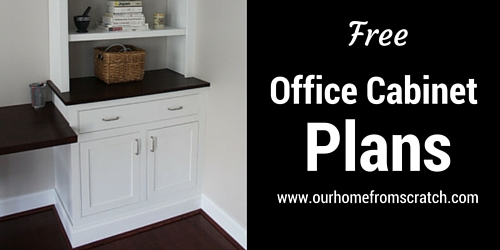
Last week, we wrapped up our sitting room built-in. I also promised a quick post on how to add trim to cabinets to make them look more “built-in” and less free standing cabinet. The process is pretty simple and can be used on any type of cabinet. There are a number of blog posts out there about turning ikea bookshelves or stock kitchen cabinets into built-ins. Adding trim can really add some depth to their look.

Here’s how to add trim to cabinets..

We start with the baseboard molding. When I installed the cabinets, I removed the baseboard molding on the wall where the cabinet was being installed. Made things easier.

baseboard trim on a cabinetBefore I add the new piece though, I’m going to add a couple thin strips of wood to the side of the cabinet. The cabinet front overhangs the sides by about 1/4″ and if I try to install the baseboard molding without a shim, it won’t look right. Adding a strip to the top and bottom help keep the molding solid against the cabinet.

shim on cabinetThe molding on the wall is cut square on the cabinet side and just butts up into the cabinet. The molding that goes on the cabinet has a coped joint on the left side and a miter joint where it meets the front. After it was installed, I caulked and painted the molding. To make this job easier, it helps to pre-paint all the trim then all you need to do is some touch-ups after it’s installed. Last thing you want to be doing is painting that close to carpet.

baseboard trim on cabinet

built-in molding 2Now for the crown molding..

There are a couple ways to approach crown molding on cabinets. You could do option A, like John and Sherry did in their kitchen, which is to add a strip of wood on top of your cabinets. This method is perfect for already existing cabinets that don’t have a lot of width up top to accommodate the 1/2″ or so of crown molding that will need to make contact with wood.

Option B, let’s call it, is to skip the extra piece of wood and nail the crown molding right into the face frame of the cabinet.  This option works if you DO have a lot of space near the top of the cabinet.  In the case of our built-in, we’re going with option B.  Actually, I designed the top cabinet to have that extra 1/2″ space.. another benefit of building your own stuff.

To get started, I measured about 1/2″ down from the top of the cabinet and made some pencil marks.  I’m also adding a shim up here as well.  Oh and if you look closely at the next picture, you can see some splintering at the edge of the plywood.  That’s from using a saw blade that wasn’t as sharp as it should have been.  It’s okay though, because it’s getting hidden by a shim and crown molding.

crown molding on cabinetshimming crown moldingNow, how to cut crown molding… It helps if you use a special crown molding jig, which you can pick up from Amazon or Lowes.  The jig keeps the molding at the right angle for cutting.  What’s the right angle?  Well, crown molding has two flat surfaces that are 90 degrees from one another.  Both of those surfaces need to be 90 degrees on the miter saw when you cut them.  Crown molding jigs help to lock the molding in that position.

how to cut crown moldingYou also need to cut them upside down.  That can be tricky.  It helps if you think about the molding and the piece you are installing it on as being upside down too.  For real, find some crown molding that already installed somewhere and look at it if you were standing on the ceiling.  It would look just like normal baseboard molding if you look at it from that perspective.  The challenge is thinking about it like that when you are standing in front of your miter saw.  It’s tricky.  I’ve installed a lot of it and it still throws me for a loop.  I had to buy 3 pieces of crown molding for this project because I messed up the cuts twice.  It happens.  Crown molding takes practice.

I’ll probably do a more intensive how-to video or a dedicated post on it as some point, but for this post I just wanted to show you the basics of adding trim to cabinets.  Crown molding on walls is roughly the same, but requires a little extra work.

But seriously though, think about it upside down.

crown molding miter sawcrown molding on cabinet 2When marking the crown molding for the cuts, I like to leave the first piece long and mark it for length right on the cabinet instead of measuring it with a measuring tape.  Just make a mark where it meets the front edge.  Your crown molding should just touch the 1/2″ marks you made earlier, which will ensure that your molding is level… as long as your cabinet is level that is.  I used a brad nailer with a 3/4″ nail for all of this work and I skipped the glue.

crown molding on built-inSo that’s crown molding and baseboards on cabinets.  Not too hard and it makes a world of difference.

Later this week I have a final exam and then I’m done grad school for the summer!  That means a summer blog theme face lift and more outdoor projects!  Only one more course in the fall too.  Can’t wait. 


From Cabinets to Built-Ins

Share this post

Monday is my first day back to work after two wonderful weeks home with my amazing wife and two beautiful daughters.  Fastest two weeks of my life.  It’s amazing how a little time away from the hustle and bustle puts your life into perspective.  Helps to prioritize what’s important.

Today is also the day we’re sharing the reveal of our completed built-in project.  Last time we discussed this work, we shared the installation procedure and the door pulls.  During my paternity break, Lisa and I managed to finish the trim work, paint and fill it with toys and books.

built-in cabinetLet’s do a quick recap..

We started with a couple overview drawings after brainstorming on some ideas we pinned. After some thinking, we ended up shaving the width down to 48″ from 60″ to make it fit into the space a little better.

built-in front viewFrom the whole assembly drawing, we drew out the plans for the face frames and then built those using pocket screws.

pocket screwsWith the face frames built, we filmed a video on how to make shaker style inset doors for a unique custom look.  Installing the finished doors to the frame was the trickiest part of the whole process for me.  Not impossible, just annoying!

After the doors were done, we moved onto the plywood box portion of the work.  We used 3/4″ Birch because it’s great for paint grade projects and 3/4″ gives us a strong, sturdy cabinet.  To make the plywood cutting process easier on ourselves, we drew up cut sheets.

cut sheetsThe cabinet boxes were assembled with dados and grooves made on my table saw.  I prefer grooves over pocket screws for the box portion of cabinet work due to the strength of the joint, plus the grooves help keep everything aligned.

grooves and dadosThe cabinets were assembled with some wood glue and then clamped to the face frames.  I also used a biscuit jointer to keep the fasteners completely hidden (optional).

cabinet clampedAt this point in the process, both the top and bottom cabinets were essentially done.  I just needed to add a plywood countertop and throw in some shelves.

built-inAfter some sanding, priming and paint, it was time to install the cabinets to the wall with the help of a neighbor and add the door hardware.  The cabinets were painted with the same semi-gloss latex as the trim work in the rest of our home.

built-in installedThe very last thing we did was tie the cabinet to the wall with baseboard and crown molding.  The molding helps to transform the look of the cabinets to something more custom and built-in.  It helps if you caulk the seam where the cabinet meets the wall as well.  We’ll be bringing you a how-to on trimming out cabinets later this week.  We just decided to jump the gun and bring you to the finish line a bit early.

Here’s what it looks like now…

built-in

crown molding on built-in

built-in front view

built-in molding 2

inside the built-inThe built-in is in our sitting room and it looks like we’re going to be using it for kids books and some other… stuff.

What tools do you need?  You absolutely DO need the following:

1. Miter or chop saw
2. Table saw
3. Drill
4. Pocket hole kit
5. Work table and space to build it
6. Cabinet sized clamps
7. Preferably a brad nail gun
8. Circular saw
9. Straight edge or level

How much will this project cost?

Here’s what I spent on lumber and hardware (approx):
1. Doors: $32
2. Plywood: $152
3. Frame: $30
4. Shelves: $15
5. Primer: $12
6. Hardware: $20
Total: $261

I already owned the hinges and the paint and I may have left off a purchase or two accidentally, but you get the idea.  Definitely under $300.

How much would it cost to buy instead of building?

Good question.  This cabinet set from Pottery Barn is somewhat comparable.  It’s almost 2 feet shorter though.  Costs about $1800 not including shipping.  Yikes.

pottery barn Logan cabinet(via Pottery Barn)

So hopefully, after reading this series, you have an understanding of what it takes to make a custom built-in yourself… from scratch (pun intended).  Don’t be afraid to build something from a drawing you make yourself.  Yes, I’m planning on uploading the plans for this project this summer and all the projects I’ve done so far, but you don’t need those.

It does take some experience and a modest amount of carpentry skills to pull off, but at the end of the day, a built-in is just a couple of cabinet boxes.  You can build a box.

Follow my blog with Bloglovin

Installing the Built-ins

Share this post

Hey everybody!  Hope you all had a great weekend.  We’ve made some major progress on our built-in project which, if you follow us on Instagram, you may have already gotten a peek of it.  We still have a little bit of finishing work to do yet, but we expect to wrap that up by the end of the week.  So let’s get right to it.  Here’s how we installed our built-ins.

We started with the wall where the cabinet was going to be located.  I had my neighbor, Mike, give me a hand with installing it since Lisa is out of commission at the moment.  Being 39+ weeks pregnant will do that.

built-in wall 1I marked the center width of the wall, the stud locations and drew some vertical and horizontal lines to index the location of the outlet.

arking the wallTo get the bottom cabinet to butt up against the wall, we removed the baseboard molding with a box cutter and a pry bar and transferred the outlet marks to the back of the cabinet.

marking the cabinetTo cut the hole for the outlet, I used a small drill bit to drill a hole in each corner from the back and then used a larger one from the front.  Large drill bits tend to burst whatever they go through, so by drilling from the front first any bursting will be on the back.

Then it’s just a matter of centering the bottom cabinet onto the wall and using some long drywall screws with finish washers.  The finish washers keep the screws from digging into the wood.

base cabinet installedfinish washersThe top cabinet sits on the bottom and gets secured to the wall with a few screws as well.  I waited until this point to install the doors.

bottom cabinet close upbuilt-in cabinetbuilt-in shelvesside profile

built-in installedWe still have to wrap the bottom cabinet in baseboard molding and the top in crown.  I’ll probably throw in some door pulls  too.

Lisa is pretty happy with it and has already started adding some stuff to the shelves.

Wrapping up any projects on your end?


Sanding and Painting Unfinished Furniture

Share this post

Happy Tuesday! Sure beats Happy Monday, am I right?  We are just moments away from wrapping up our built-in project.  All the cabinet work has been primed and painted, I just need to add a second coat to some areas.  I don’t know if I’ve ever shared the basic process I follow when I sand and paint furniture.  I have a habit of repeating myself, which Lisa loves to gently remind of me from time to time.  So, if you know how to sand and paint furniture, just skim the photos and stop by later to see the finished built-in.

Sanding and Painting Unfinished Furniture

I start with my random orbital sander (ROS).  I picked this sander up last year when we were working on our sliding drawer project.  It was relatively inexpensive and works great.  ROSs are the most versatile of the electric sanders and work well with most projects.  The other options are the vibrating pad or reciprocating sanders and the belt sanders.  The reciprocating sanders aren’t bad either, but they only shake in one direction so they require more work on your part to use them effectively.  Belt sanders are better for bigger more aggressive sanding work and should probably be skipped for regular woodworking projects. ROSs are the Goldilocks of sanders.

random orbital sanderThe sand paper for the ROS comes as a disc with either an adhesive or velco backing, which makes swapping them out a quick process.  For most woodworking projects, if I have wood that is in good shape and doesn’t have any gouges or scratches in it, I use a 120 grit paper.  The 120 is abrasive enough to take down sharp edges, but gentle enough that it won’t majorly scratch your work.  If I need to remove a lot of material or repair deep scratches I’ll start with a 40 or 60 grit paper.  The lower the number, the more abrasive the paper.

After I’ve sanded all the visible surfaces with the 120, I switch to a 220 grit paper and repeat the process.  Since this is a paint grade project, that’s as far as I’ll go.  Some higher quality or stain grade projects may require a 330 grit paper to polish the wood further.  While sanding I also make sure to take the sharp edges off all the corners.  A knocked down edge will hole the paint or stain much better than a sharp edge.  Plus, it feels better on your hand.

You know you’re done sanding when the project feels baby soft to the touch.  To prep the piece for painting, use either a compressed air source to blow the work clean or shake it and wipe it down.

For the painting process, I start with a spray primer.  I’m a stickler for this part of the painting process.  Most paint grade projects I work on will get about four coats of paint, 2 of primer and 2 of the finish coat.  I try to spray the first two coats of primer.  The reason being, brushes and rollers leave marks, however well executed and subtle.  Spray paint leaves a near perfect finish.  So, it’s better to have a smooth base and some brush marks on the last couple coats than four coats of brush marks.  Get it?

primed cabinetIf you don’t have a spray system with an HVLP gun like we used on our wainscoting project, you can use a regular can of spray paint/primer.  I used a few cans of Valspar primer from Lowes for this project after my HVLP spray paint ran out.  The more coats of spray paint you use, the smoother your result will be.  To get that Ikea-like candy coating, if that’s what you’re after, use the spray primer followed by several coats of spray lacquer including a few clear coats of lacquer.  Be sure to sand lightly with a 330 grit or higher paper or steel wool in between coats.

Since this project is a built-in, we want it to match our baseboard molding and look like it’s part of the wall.  To get that look, we’re following the primer with a couple coats of regular semi-gloss latex trim paint from Sherwin Williams (Shell White).  Regular latex paint is not ideal for book cases or anything where you’ll have inanimate objects sitting on it for long periods of time.  Reason being, the latex will get stuck to whatever you rest on it eventually and peel off.  Ideally, we should use a high quality furniture paint that resists that sort of sticking, which is called “blocking”.  You want a paint with good “blocking” resistance.  Enamels and lacquers are great for that feature, latex paint not so much.  So why are we using it?  Well, as I mentioned, we want the built-in to match the house trim, so that’s what we’re stuck with.  I’m hoping the primer we used will help prevent some of that sticking nastiness.  Time will tell.

What’s a good product for furniture painting that resists blocking?  We used Benjamin Moore’s Satin Impervo on the kitchen cabinets from our first home and we loved how it came out.  Ask around though.  Professional painters seem to have some strong opinions on their favorite products.

So that’s my two cents on sanding and painting.  Hope you got something out of it. 

Baby #2 is not here yet, either just in case you were wondering.  Anyone else suffering through some painting projects at the moment?

Machining and Assembling Cabinets

Share this post

With our face frames built, the plywood all dimensioned and cut out of the 4×8 sheets, I’m all set to machine the plywood for our joints.  As I mentioned, I’m using dados and grooves.  Most of the pieces will receive some type of groove.  Here’s what the sides of the bottom cabinet look like with their grooves.

grooves and dadosHere’s a close up of those grooves…

dadoAt some point, I need to make some google sketch up drawings of this cabinet with the grooves all pointed out.  I think that may help if you’re trying to understand how to make one of these yourself.  You don’t need to build a cabinet with grooves, you can always use pocket screws or regular butt joints, but I’m a fan of the grooves.  Once they’re glued, it’s a pretty solid joint.

cabinet joint

So, I machine the grooves into all the pieces that require it and I can start assembling everything.  For this post, I’ve only got the bottom cabinet put together since I only have four quality clamps.  Clamps are not cheap.  First critical step with the assembly is to dry fit all the parts together without glue to make sure it goes together as planned.  Any changes can be made at this point without much fuss.

cabinet top viewcabinet assemblyOnce I’m happy with the fit, I add wood glue into all my grooves and squeeze my joints tight.  You can use brad nails into those joints too if you want, but I’m also going for a hidden fastener look here, so I’m going to only use a couple nails here and there in really inconspicuous locations.  You don’t need screws or nails for this cabinet, the glue alone will be plenty strong.

While the glue on the box is still fresh, I lay the face frame onto the box.  The face frame is actually on the box already in the pictures above.  To attach the face frame to the box, you could use nails or pocket screws, or even grooves, but I’m going to go with a biscuit joint.  Biscuit joints are little slots that take these dry wooden biscuits.  Both the face frame and the box will get slots.  Once you add glue into the biscuit joint, the biscuit expands and when the glue cures, it’s a pretty strong joint.  Again, I’m going with this joint since you won’t see any nail holes.  You could always glue and nail the face frame to the box then fill in the holes with wood putty.  Since I already own a biscuit jointer, I’m going to stick with that.

biscuit jointerTo make the biscuit joint, I put a light mark on both the face frame and the box.  That mark is where the biscuit jointer tool will be applied.

biscuit markbiscuit jointI’ll only do a few biscuits for this cabinet, a couple on each side.  I make sure to add glue to the whole edge of the cabinet box where it meets the face frame.  I went a little overboard with the wood glue.  I’ll wipe any extra that leaks out with a wet paper towel.

biscuit in jointWith the glue applied, I drop the face frame back onto the box and clamp it all together.

Here’s the front view of the bottom cabinet without the doors.

cabinet front view The view from the back…

back of the cabinetSide view…

cabinet clampedSo the bottom cabinet is done.  I may be adding a shelf to this at some point, but that can be done later.

What’s left?  Well, I need to assemble the top cabinet and add the counter top to the bottom cabinet.  Then it’s onto painting and installation!

Anyone getting the urge to build something?  Or does this seem too intimidating?